
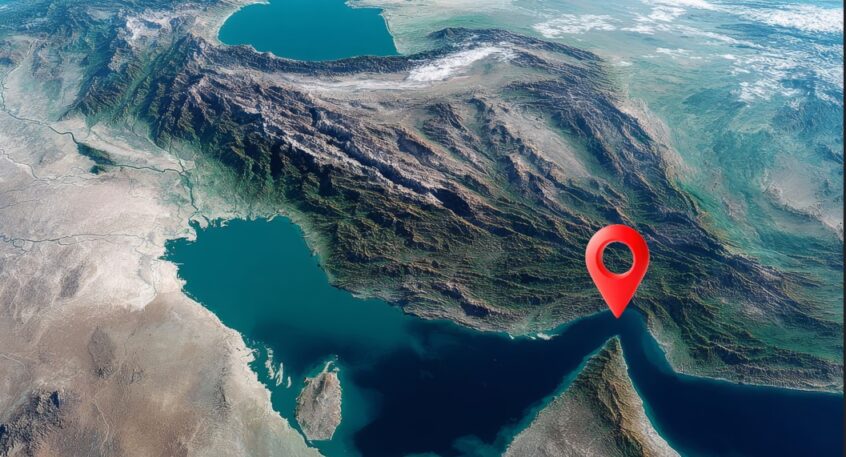
- The war with Iran has led to a surge in energy prices which could represent a significant new headwind for the global economy. The size of the impact will very much depend on how long the conflict lasts and our base case remains that the bulk of the disruption to the energy markets should last for no more than a few weeks.
- Global growth has held up unexpectedly well over the past year and should continue to be quite resilient in the face of this latest shock. Growth is likely to be somewhat weaker but the underlying recovery should not be derailed.
- The rise in inflation caused by the hike in energy prices will delay or even prevent further interest rate cuts this year but is very unlikely to cause rates to be raised.
- Equities and bonds may remain under pressure until there is an easing in the disruption to energy markets. However, assuming the disruption lasts for a few weeks rather than months, markets should then recapture their losses as the underlying macro backdrop will return to being supportive.
- The market declines seen so far are still relatively small in size in the broader context. Even after last week’s falls, global equities are still up around 1% year-to-date while bonds are little changed.
- History suggests the market declines following the outbreak of geo-political shocks or wars are in most cases relatively short-lived and that this is not the time to run for cash.
Markets fell across the board last week as the closure of the Strait of Hormuz and increased worries of a prolonged conflict took their toll. Oil prices rose substantially and after a further jump this weekend, the Brent crude price is now up to around $105/bbl from $70 before the crisis erupted. Gas prices are also up considerably.
Global equities ended the week down a bit over 3% in both local currency and sterling terms. The US held up best, falling 1.5% in sterling terms while the rest of the world was down 5.8%. Markets are down a further 1-1.5% this morning.
Bonds have also suffered with 10-year UK gilt yields now at 4.7%, up 0.4% from their low prior to the war. UK gilt and US Treasuries lost 2.5% and 1.0% respectively last week. Gold was also down 1.5% in sterling terms. The only assets to post gains last week were energy related.
The closure of the Strait of Hormuz is critical as around 20mbd or 20% of global oil supply passes through it in normal times. Not only that, it is also a major chokepoint for the transportation of liquefied natural gas. The key question now is how long the Strait will remain closed. The US has talked of providing safe passage of ships but it is far from clear how soon this will happen or how effective it will be.
The other longer-term issue is how much oil and gas infrastructure in the region is damaged from Iranian attacks which would prevent output returning quickly to pre-crisis levels when the Strait reopens. So far, the damage seems quite limited.
Market worries that the conflict could continue for months rather than weeks have been fueled by the latest developments. The election of Khameini’s son as Iran’s new Supreme Leader shows the hardliners are still firmly in charge, seemingly removing any possibility of an early end to the war. Trump’s demand for Iran’s ‘unconditional surrender’ and talk of sending US special forces to capture Iranian uranium have also not helped.
But this still leaves two major factors arguing against a prolonged conflict. First, the surge in the oil price is feeding through to US gasoline prices which are already up 20% or so and at an 18-month high. This can only exacerbate the ‘affordability crisis’ in the US which is a major issue and encourage Trump to limit the damage done ahead of the mid-term elections in November, which could well see the Republicans lose control of Congress.
Opposition within the US to the war, which was never that popular even at the start, is only likely to grow the longer it lasts and the more it seems that Trump has embroiled the US in a lengthy and costly conflict in the Middle East – despite previously railing against past Presidents for doing exactly that.
Second, Iran and the US only have a finite supply of weapons and neither side may be able to keep up the current scale of hostilities for more than a few weeks. That said, Iran may continue to be able to launch significant drone attacks even if its ability to launch missiles is severely curtailed.
The surge in energy prices will boost global inflation and to a lesser extent hit growth. But the shock is not of the order seen when Russia invaded Ukraine in 2022. The current crude oil price of $105 remains somewhat below the highs of $120-130 seen back then. Also importantly, European natural gas prices may have doubled in the last couple of weeks but are still less than half their level in 2022.
The extent of the damage done to growth and inflation depends more on how long the spike in prices is sustained for, rather than the exact extent of the surge. Our base assumption here, for the reasons outlined above, remains that it is unlikely to be sustained for more than a month or two.
A much more prolonged disruption to the global energy markets still looks just a tail risk. The situation in Iran may well remain deeply problematic for years to come but its capacity to disrupt the global economy should be much diminished.
The other good news is that the global economy is in relatively good shape to withstand this latest shock. Indeed, its resilience in the face of central banks raising interest rates sharply in 2022 and last year’s US tariff hikes is reassuring.
Importantly, this time unlike in 2022, central banks are not expected to raise rates. Rather, the shock should do no more than delay or possibly prevent the rate cuts which were otherwise on the cards for later this year. Relatively weak labour markets both in the UK and US – unlike in 2022 – should limit central bank concerns about the rise in inflation feeding through to larger wage increases and producing second round inflationary effects.
Government action may also be forthcoming to limit the hit to consumers from higher energy prices. In the UK, the energy price cap will anyway delay any impact until July. And in the US, the latest events only increase the likelihood of tax cuts over the summer ahead of the mid-term elections. The emergency G7 meeting today will also apparently consider releasing some of the 1.2bn barrels of oil held in reserve.
All said and done, we do not expect the surge in energy prices to derail the global economic recovery. If so, this should set the scene for markets to recoup their losses when the crisis dies down. The clear lesson from history is that in most cases, the market declines in response to geopolitical crises and wars tend to be short-lived and followed by swift rebounds.
The average decline in US equities following the major geopolitical shocks since 1950 has been 4% in the first week which was then recovered in the subsequent month. Equally striking since 1990, even if one had sold a balanced portfolio (comprising 60% equities and 40% bonds) the day before a shock broke and moved into cash, more times than not one would have been better off over the following year doing nothing. And over three years, one would have fared better sitting on one’s hands on all occasions and most times considerably so.
When markets do recover, we would expect the trends prevailing prior to the current crisis to reassert themselves, namely the US to underperform other equity markets and dollar weakness to resume. The US has held up better than other markets in the sell-off primarily because it is self-sufficient in energy unlike most of Europe and Asia and so less exposed to the hike in prices.
European and Asian markets may also have suffered more from profit-taking than the US as they have very much led the equity gains in recent months. Despite the US holding up significantly better than other markets last week, it has still underperformed the rest of the world by 5% so far this year.
The final point is that the declines we have seen so far in markets are nothing out of the ordinary despite the alarmist headlines. As at the end of last week, global equities were still up 1% or so year-to-date and bonds little changed with UK gilts down a bit but Treasuries up slightly. As for gold, it is still up 20% since the start of the year.
While the war in Iran is all consuming, there were a couple of other developments last week worth noting. First, US payrolls posted an unexpected decline in February. This re-established the picture of a weakish labour market which had been called into question by the surprisingly large gain reported for January. Second, the Chinese authorities as expected announced a slightly lower growth target for the coming year of 4.5-5%, down from 5% last year.
In the UK, the Chancellor’s Spring Statement barely merits a mention. No new policies were announced and due to events in Iran, the new economic forecasts from the OBR were out of date even before they had been released.
This week, all eyes will clearly remain focused on events in the Middle East. But we do also have US inflation numbers out on Tuesday and Friday.

Rupert Thompson – Economist